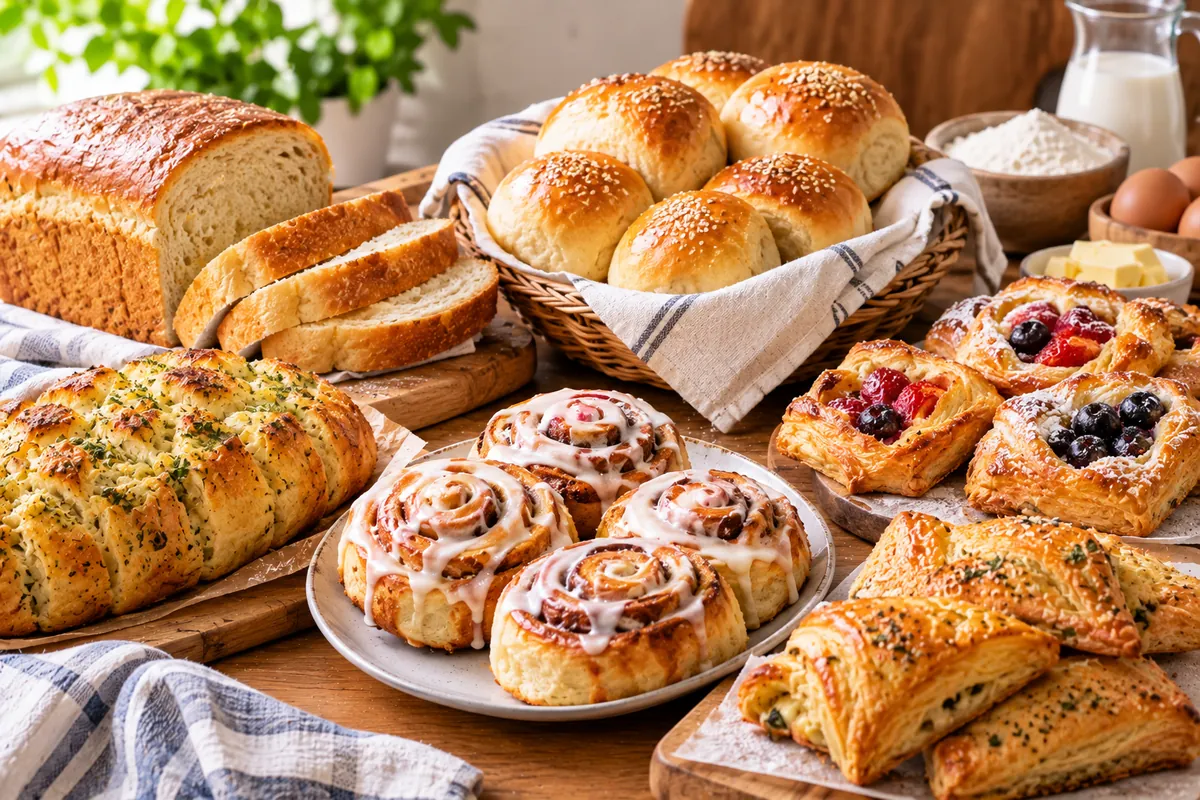
Easy homemade bread and pastry recipes, Making bread and pastries at home may seem difficult at first, but it can actually be simple when you start with easy recipes. You do not need to be a professional baker or have expensive equipment to make something delicious in your own kitchen.
These easy homemade bread and pastry recipes for beginners are perfect for anyone who wants to learn basic baking skills. With simple ingredients, clear steps, and a little patience, you can make soft bread, buttery pastries, dinner rolls, and other tasty baked treats at home.
Homemade bread also has something special about it. The smell of freshly baked bread filling the kitchen can make an ordinary day feel warm and comforting.
Why Try Easy Homemade Bread & Pastry Recipes?
There are many reasons to try making bread and pastries at home. First, most basic recipes use simple ingredients such as flour, yeast, water, milk, butter, sugar, and salt.
You can also control the ingredients and flavors. Add herbs to bread, cheese to rolls, cinnamon to pastries, or your favorite fillings to make each recipe your own.
Another great thing about homemade baking is that you can make fresh bread whenever you need it. Homemade bread is delicious for breakfast, sandwiches, snacks, or family meals.
For beginners, it is best to start with simple recipes before moving on to more complicated breads and pastries.
Easy Homemade Bread for Beginners
A simple homemade loaf is a great place to start. Basic bread usually requires flour, yeast, warm water or milk, sugar, salt, and a little butter or oil.
The most important part of making bread is allowing the dough enough time to rise. Yeast needs warmth and time to work, so do not rush this step.
Once the dough has doubled in size, gently shape it and place it in a loaf pan or on a baking tray. Let it rise again before baking.
When the bread is golden brown and sounds slightly hollow when tapped, it is usually ready.
Let the loaf cool before slicing. Cutting very hot bread can make the inside appear sticky or gummy.
Soft Homemade Dinner Rolls
Soft dinner rolls are simple, useful, and perfect for family meals. They can be served with soup, curry, roasted vegetables, chicken, or other main dishes.
The dough is similar to basic bread dough, but small portions are shaped into individual rolls.
For soft rolls, avoid adding too much flour. The dough should be soft and slightly elastic rather than very hard.
Arrange the rolls close together in a baking dish so they can rise and bake into soft, fluffy pieces.
Brush the warm rolls with a little melted butter after baking for extra flavor.
Easy Garlic Bread
Garlic bread is another easy recipe that beginners can make at home. You can prepare it using homemade bread or a simple store-bought loaf.
Mix softened butter with minced garlic and herbs such as parsley. Spread the mixture over sliced bread and bake until the edges are lightly crisp.
For a cheesy version, add grated mozzarella or another melting cheese before baking.
Garlic bread is perfect with pasta, soup, pizza, or a simple family dinner.
Simple Homemade Pastry
Pastry can sound complicated, but beginners can start with simple recipes that do not require advanced techniques.
A basic pastry dough can be made with flour, cold butter, a little sugar or salt, and cold water. The key is to keep the butter cold while preparing the dough.
When making pastry, avoid working the dough too much. Overworking can make the pastry tough instead of light and flaky.
Once the dough is prepared, chill it before rolling. This helps the butter stay firm and can improve the final texture.
You can use simple pastry dough for sweet or savory recipes.
Easy Fruit Pastries
Fruit pastries are a delicious way to use simple pastry dough. Apples, berries, peaches, and other fruits can work well.
For a simple apple pastry, slice apples and mix them with a little sugar and cinnamon. Place the filling inside the pastry and bake until golden.
You can also add a little lemon juice to the fruit filling for a fresh flavor.
Serve fruit pastries warm with tea, coffee, whipped cream, or a scoop of vanilla ice cream.
Homemade Cinnamon Rolls
Cinnamon rolls are soft, sweet, and perfect for breakfast or afternoon tea.
The dough is made with flour, yeast, milk, butter, sugar, and eggs. After the dough rises, roll it into a rectangle and spread it with butter, cinnamon, and sugar.
Roll the dough into a log and cut it into individual pieces. Place the rolls in a baking dish and allow them to rise again before baking.
A simple glaze made with powdered sugar and milk can be added after the rolls cool slightly.
For beginners, cinnamon rolls are a great recipe for practicing yeast dough.
Easy Cheese Pastries
If you prefer savory baking, cheese pastries are an excellent option. You can use homemade pastry dough or puff pastry to make them easier.
Fill small pieces of pastry with grated cheese, fold them, and seal the edges. Brush the tops with beaten egg and bake until golden.
You can add herbs, black pepper, or a little chili for extra flavor.
These pastries make a great snack for family gatherings, lunch boxes, or tea time.
Easy Baking Tips for Beginners
Making bread and pastries becomes easier when you understand a few basic rules.
Measure Ingredients Carefully
Baking works best when ingredients are measured accurately. Use proper measuring cups or a kitchen scale when possible.
Too much flour can make bread and pastries dry, while too much liquid can make the dough difficult to handle.
Use the Right Temperature
When working with yeast, water or milk should be warm rather than very hot. Very hot liquid can damage the yeast.
For pastry, cold butter and cold water are usually important for creating a flaky texture.
Give Dough Enough Time to Rise
Do not rush yeast-based recipes. Rising time can vary depending on the temperature of your kitchen.
The dough should usually become noticeably larger before shaping and baking.
Do Not Add Too Much Flour
One of the most common mistakes beginners make is adding too much flour because the dough feels sticky.
A little stickiness can be normal. Add flour gradually until the dough becomes manageable, rather than making it very stiff.
Preheat Your Oven
Always preheat the oven before baking unless the recipe specifically says otherwise.
A properly heated oven helps bread and pastries bake evenly and develop a nice golden color.
How to Know When Bread Is Ready
Knowing when bread is fully baked can take some practice.
The outside should usually be golden brown, and the loaf should feel firm. For many breads, tapping the bottom produces a slightly hollow sound.
If you have a kitchen thermometer, checking the internal temperature can also be useful for certain bread recipes.
Do not slice the bread immediately after taking it from the oven. Give it enough time to cool so the inside can finish setting.
How to Make Bread and Pastries More Flavorful
Simple ingredients can create delicious flavors, but small additions can make your baking even better.
For bread, try adding garlic, herbs, cheese, seeds, or roasted onions.
For sweet pastries, cinnamon, vanilla, chocolate, nuts, apples, berries, or dried fruit can add extra flavor.
You can also brush pastries with egg wash before baking. This helps create a beautiful golden finish.
A light dusting of powdered sugar can make sweet pastries look attractive without complicated decorating.
How to Store Homemade Bread & Pastries
Fresh homemade bread is best when eaten within a few days. Keep it in an airtight container or bread bag at room temperature.
Avoid storing bread in the refrigerator unless necessary, as it can sometimes make bread lose its soft texture faster.
Pastries containing cream, custard, or fresh fruit may need refrigeration. Always follow the storage requirements for the specific recipe.
You can also freeze many breads and unfilled pastries for longer storage. Wrap them properly to protect them from freezer burn.
Common Mistakes Beginners Should Avoid
Bread and pastry become much easier when you learn from common mistakes.
Adding too much flour can make dough heavy and dry. Not giving yeast enough time can result in dense bread. Using very hot liquid can affect yeast activity.
For pastry, warm butter can make the dough difficult to work with and reduce flakiness.
Another common mistake is opening the oven too often while baking. Try to keep the oven door closed as much as possible so the temperature stays stable.
Most importantly, do not worry if your first loaf or pastry is not perfect. Baking improves with practice.
Final Thoughts
Making bread and pastries at home is a rewarding skill that anyone can learn. You can start with a simple loaf, soft dinner rolls, garlic bread, fruit pastries, cinnamon rolls, or easy cheese pastries.
These easy homemade bread and pastry recipes for beginners give you a good starting point for learning how yeast, dough, butter, and baking work together.
Start with one simple recipe, follow the instructions carefully, and give yourself time to practice. With each bake, you will become more comfortable working with dough and trying new recipes.
Soon, homemade bread and pastries can become a regular part of your kitchen, giving your family fresh and delicious treats to enjoy.
Easy Homemade Desserts Everyone Will Love
FDA Food Allergies Guide